Blog > Injection Molding > Injection Molding vs. Other Plastic Molding Processes: A Complete Guide for Large, Sustainable Parts
Injection Molding vs. Other Plastic Molding Processes: A Complete Guide for Large, Sustainable Parts
Main takeaway
This guide compares plastic injection molding processes head-to-head, with particular attention to large plastic parts molded on 1,000-ton presses and above, tooling investment, part volumes, and sustainability.
Why Injection Molding Matters for Modern Plastic Products
If you are designing a large plastic part-a 96-gallon waste cart, an automotive structural module, or a modular flood barrier-your first decision is not what resin to use. It is which molding process to use.
Plastic injection molding is a manufacturing process that melts plastic pellets and injects the molten material into a metal mold under high pressure, producing everything from medical devices and consumer goods to industrial infrastructure components. The first injection molding machine was patented in 1872, and the technology has since become the backbone of mass production across automotive, packaging, and countless other industries.
But injection molding is not the only option. Rotational molding, blow molding, and compression molding each serve distinct roles. Choosing the wrong process can mean overspending on tooling, underperforming on part quality, or missing sustainability targets entirely.
This guide compares these injection molding processes head-to-head, with particular attention to large plastic parts molded on 1,000-ton presses and above, tooling investment, part volumes, and sustainability. Cascade Engineering, a Michigan-based manufacturer operating large-tonnage presses up to 9,000 tons, supports projects from early product design through full-scale production-and the insights here reflect that end-to-end perspective.
How Plastic Injection Molding Works
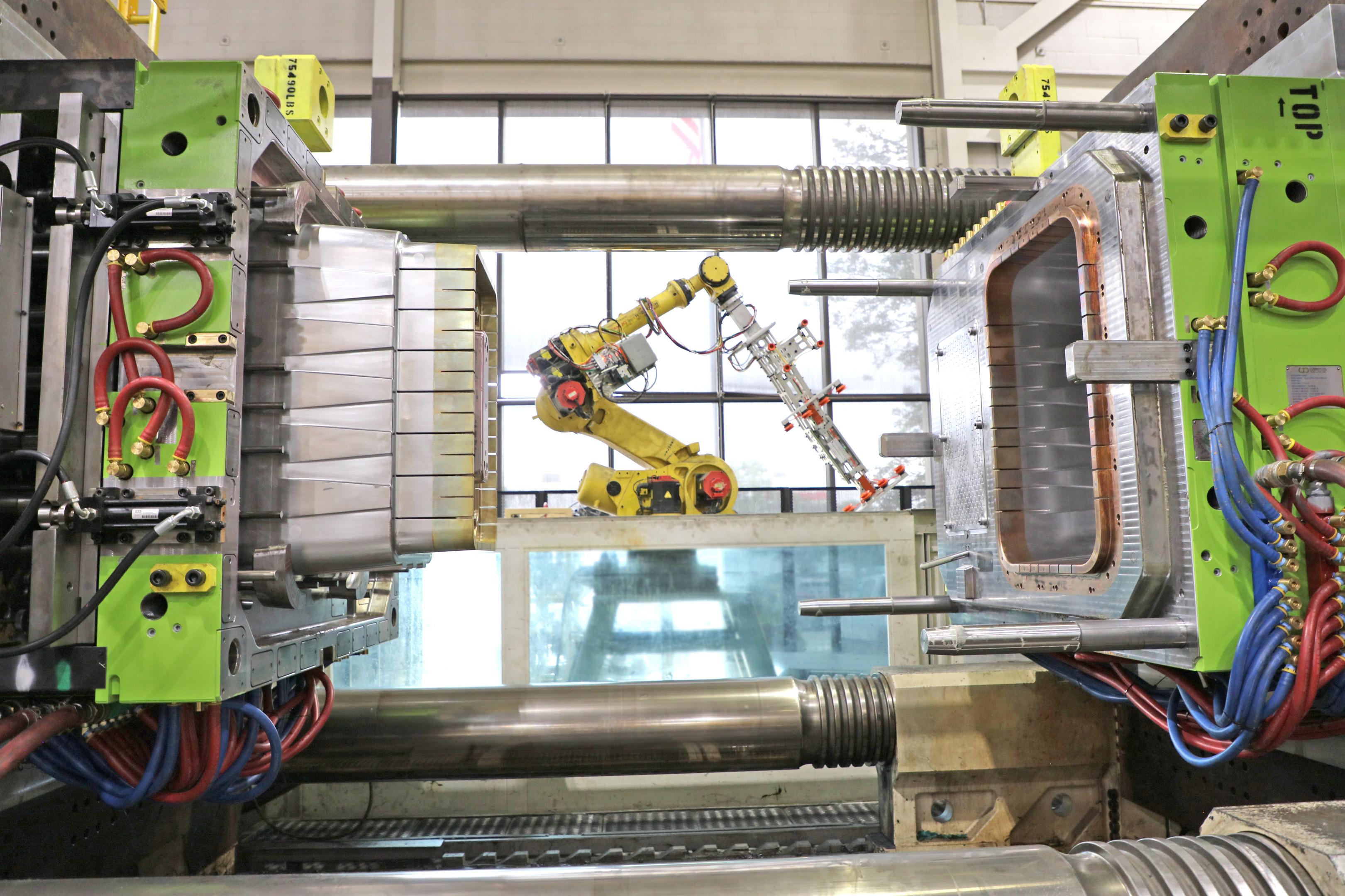
Plastic injection molding works by injecting molten plastic into a precision-built mold cavity to form plastic parts with a desired shape. Here is how the cycle breaks down:
- Mold closing – The clamping unit locks the two mold halves together under significant pressure.
- Injection – Plastic pellets are melted in a heated barrel and injected into the mold cavity under high pressure to shape the molten plastic.
- Packing and hold time – Additional material is packed in to compensate for shrinkage as the part cools.
- Cooling time – The part solidifies inside the mold. Cooling often accounts for the majority of the cycle.
- Mold opening and ejection – The mold opens and ejector pins push the finished part out.
The key equipment includes the injection molding machine (clamping unit and injection unit), the mold itself, and auxiliary equipment for material drying, temperature control, and conveyance. It supports a wide range of thermoplastics and specialty polymers for manufacturing-polypropylene, polyethylene, nylon, and engineering resins are all common choices.
Thermoplastic injection molding is the standard process for most plastics. Thermoset injection molding involves irreversible chemical reactions during curing, making it suitable for heat-resistant applications. Specialized variations like two-shot molding combine two materials in one part, insert molding allows pre-molded components to be included, and micro injection molding produces extremely small plastic parts for electronics and medical devices.
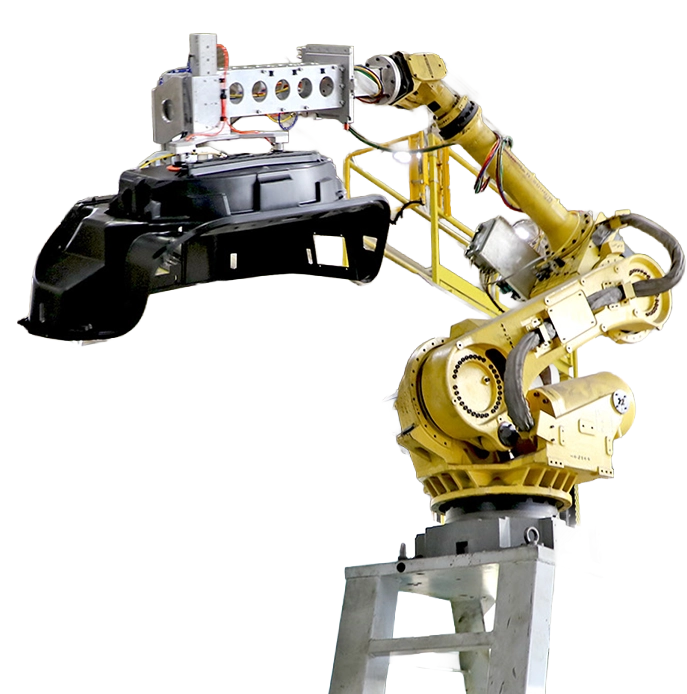
Cascade Engineering operates presses from 1,000 to 9,000 tons, suited for large and complex parts like waste carts and flood barriers. Modern scientific molding uses data-driven control of pressure, temperature, and time to achieve consistent, high-quality plastic products across millions of cycles.
Plastic Injection Molding vs. Rotational, Blow, and Compression Molding
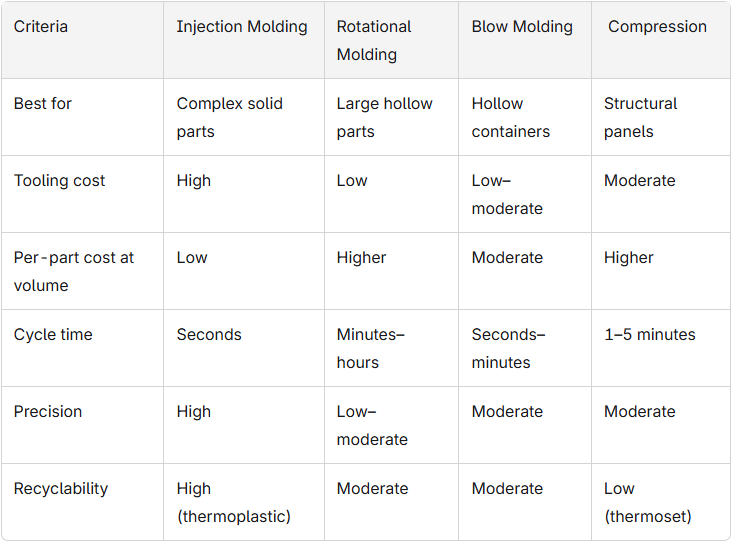
Each molding process occupies a different sweet spot in the landscape of industrial processes. Here is how they compare for a busy engineering audience:
Plastic injection molding excels at high volume production of detailed, complex parts with tight tolerances and excellent repeatability. Injection molding can create complex shapes with intricate details, and it produces parts for automotive, medical, and consumer industries-including toys, plumbing, and packaging products.
Rotational molding forms hollow plastic parts by distributing material inside a rotating heated mold. Tooling cost is low, but cycle times are long and material options are mostly limited to polyethylene variants. Surface finish and precision are lower than injection.
Blow molding is ideal for bottles, drums, and hollow containers. It produces thin, relatively uniform walls efficiently but cannot achieve the dense, solid features or integrated ribs that plastic injection delivers.
Compression molding uses fiber-reinforced thermoset compounds pressed under heat and pressure. It is suited for ultra-rigid structural panels-automotive body panels, electrical enclosures-with good surface finish and lower tooling cost for large flat parts. Cycle times run 1–5 minutes, and thermoset materials are less recyclable once cured.
Cascade Engineering helps customers evaluate these processes and recommends the approach that is most cost effective over the full product lifecycle, not just at the tooling stage.
Plastic Injection Molding Process in Detail
The production process involves more than pressing a start button. Here is what matters at each stage:
- Mold design and fabrication: Cavity and core design, gating, runners, cooling channels, and ejection systems must all be engineered before steel is cut.
- Material selection and preparation: Drying, blending of virgin and recycled resin, colorants, and additives for UV resistance or impact performance. Material science expertise is critical for large structural parts.
- Machine setup: Barrel temperatures, injection speed, holding pressure, and clamp force are set based on the plastic part design and part geometry.
- Mold testing and validation: T0, T1, and T2 trials dial in the process window before full production, including dimensional checks and mechanical testing. Cycle times for injection molding can be under 1 second for small parts, but large parts require careful optimization.
- Production control: Monitoring cycle times, scrap rates, and part dimensions ensures stable, repeatable molded parts. Injection molding produces high-quality parts consistently and reliably when these controls are in place.
Cascade Engineering uses scientific molding principles and real-time process monitoring-cavity pressure sensors, melt temperature tracking, screw position data-to maintain quality on long-running programs.
Mold Design: From Product Design to Manufacturable Plastic Parts
Mold design is where product design ambition meets manufacturing reality. A poorly designed mold leads to scrap, warpage, long lead times, and blown budgets. Getting it right early saves orders of magnitude more than fixing it later.
Key mold design considerations:
- Draft angles, uniform wall thickness, and radii reduce sink, warpage, and cosmetic issues. Injection molding allows for complex shapes with intricate details, but only when the mold supports them.
- Single-cavity vs. multi-cavity molds affect throughput. Over 128 cavities can be used in high production volume molds for smaller parts; large parts may use single cavities on massive presses.
- Hot runner vs. cold runner systems impact material waste, cycle time, and gate vestige appearance.
- Gate type and placement-edge, pin, fan, or valve gates-affects cosmetic quality and dimensional stability, particularly on large, visible surfaces where the parting line must be managed.
- Cooling system design is a major driver of cycle time and part quality, especially for parts molded on 1,000+ ton machines.
- Mold-flow simulation using tools like Moldflow or Moldex3D predicts plastic injection filling, packing, weld lines, and air traps before steel is cut-reducing expensive rework.
- Mold materials: Molds can be made from tool steels, aluminum, or stainless steel depending on volume and precision requirements.
Cascade Engineering’s engineering team collaborates with OEM design teams early, using CAD software and simulation to optimize mold design and plastic part design together.
Tooling Investment, Part Volumes, and Cost Effectiveness
Injection mold tooling is a major up-front investment. For large tools used on presses above 1,000 tons, costs scale non-linearly-a mold for a 1,000-ton machine can cost 3–5× what an equivalent mold for a 500-ton press would, driven by steel mass, machining time, and cooling complexity.
- Prototype tooling (aluminum or soft molds) is appropriate for fewer than 5,000 units or design validation via rapid tooling and rapid prototyping.
- Production tooling (hardened steel) is needed for durability across hundreds of thousands of cycles. A single mold can produce over 1 million parts.
- Annual volume drives process selection: At 5,000 units/year, injection may be feasible for high-margin parts. At 50,000–500,000+, plastic injection molding almost always wins on piece price for thermoplastic components. High tooling costs can make injection molding economically unviable for low-volume production.
- Injection molding has low labor costs and high production rates, and design for manufacturability can reduce cycle time by seconds-dramatically improving cost per part across a high-volume production run.
- It supports high-volume production of plastic components across packaging, automotive, and consumer products.
Cascade Engineering helps customers model total landed cost-tooling, piece price, secondary operations, and logistics-over the expected program life so decisions are based on economics, not guesswork.
Large-Tonnage Injection Molding for Large and Complex Parts
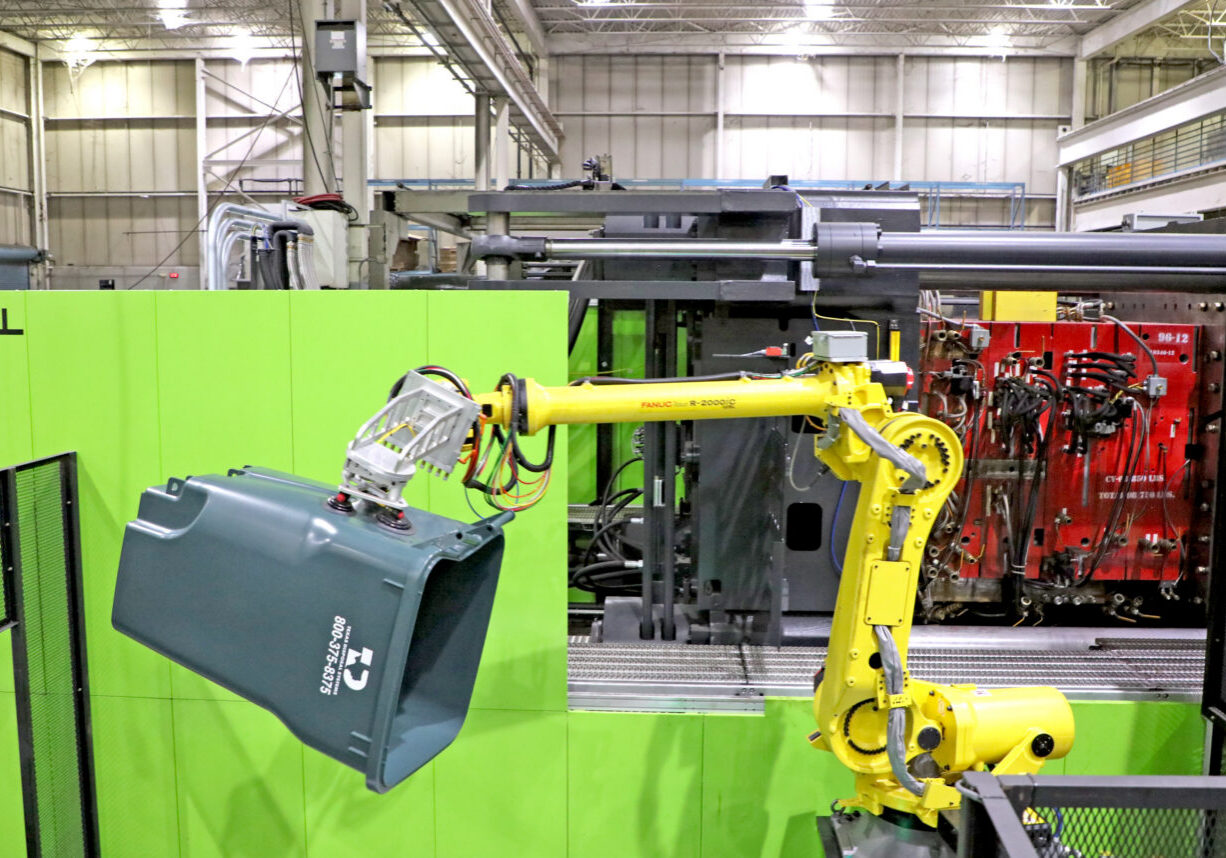
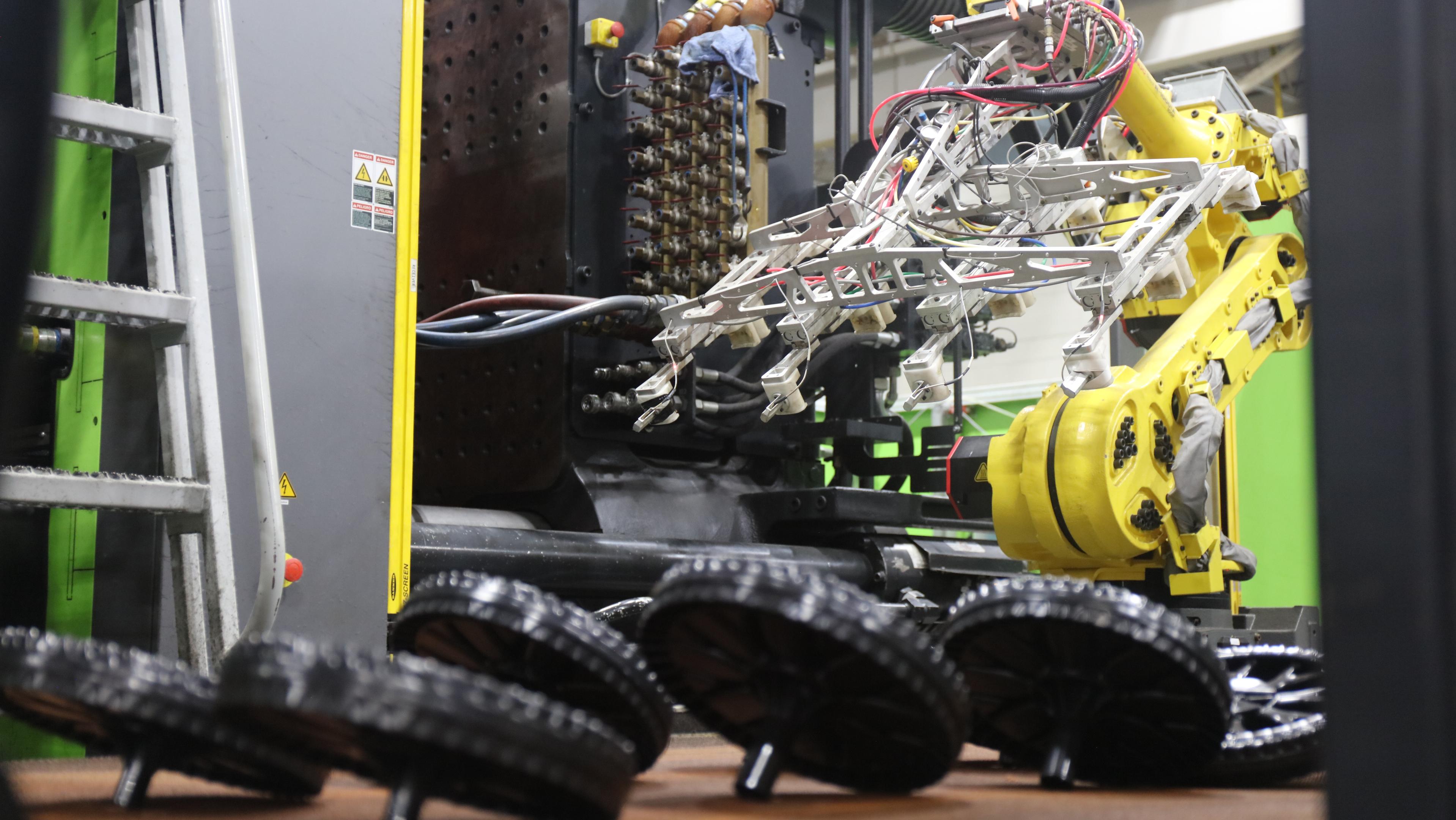
Large-tonnage injection molding uses presses from roughly 1,000 tons up to 9,000 tons of clamping force. These machines handle large or multiple-cavity tools with shot capacities exceeding 300 lbs and platens spanning more than 13 feet.
Concrete examples of large molded parts include 96-gallon waste and recycling carts, pallets, automotive front-end modules, and modular flood barrier components. Modern injection molding presses can increase production by 20% compared to older hydraulic models, and modern machines can increase production by 20% through improved servo-driven efficiency and faster dry-cycle times.
Design challenges unique to these parts:
- Long flow lengths require careful gate placement to minimize weld lines
- Managing warpage, sink, and differential cooling over large surfaces
- High clamp force and robust mold design prevent flash and maintain parting line integrity
- Consolidating multiple metal or smaller plastic parts into a single robust injection molded component improves assembly time and total cost
Cascade Engineering specializes in large, high-structural parts and can integrate inserts, ribs, and functional features directly into the plastic injection design.
Sustainable Plastics, Recycled Resins, and Lifecycle Impact
Sustainability is no longer optional in plastics manufacturing-it is a procurement requirement for many OEMs and municipalities.
Plastic injection molding is inherently material-efficient. The process is highly efficient with minimal waste, and injection molding has minimal waste as excess plastic can often be recycled back into production. Automated regrind systems can recycle scrap materials effectively, and less than 1% of materials used in well-managed manufacturing operations end up in landfills. Filtration systems can recycle processed water in cooling towers, reducing water consumption.
Key sustainability strategies in injection molding:
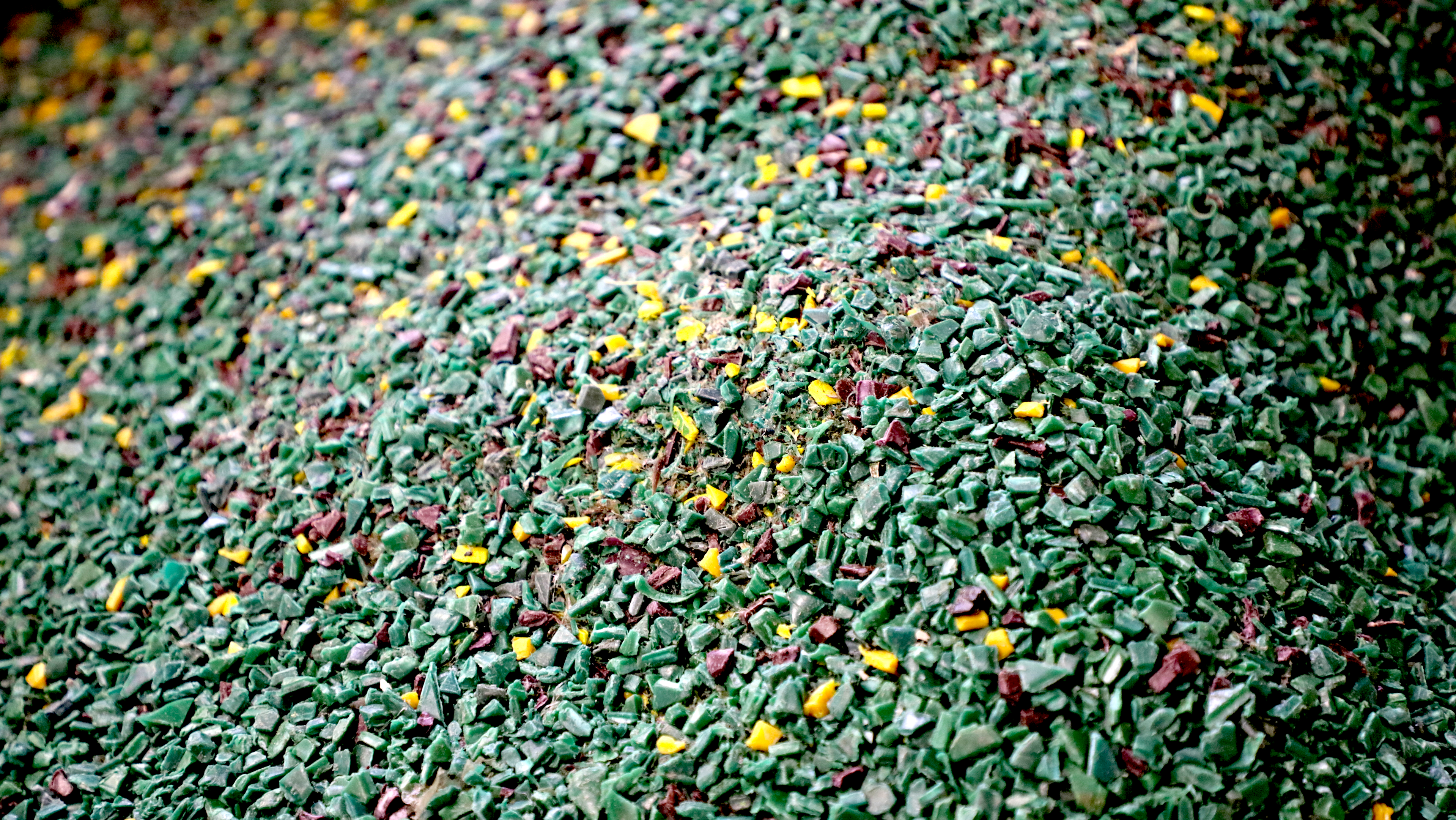
- Recycled resins: Post-consumer and post-industrial recycled content can be used in large plastic products like waste carts and pallets.
- Monomaterial construction: Monomaterials simplify recycling and reduce contamination issues. Designing parts from a single polymer family supports end-of-life recyclability.
- Sustainable practices in injection molding include using recycled materials, minimizing waste, and designing for custom plastic compounding with high recycled content.
Compared to compression molding, which uses thermoset resins that are difficult to recycle once cured, thermoplastic injection molding offers a clear advantage in material circularity. Rotational and blow molding can recycle scrap, but the limited resin options and thicker wall profiles often reduce efficiency.
Cascade Engineering’s EcoCart® line demonstrates what is achievable: durable municipal carts with high recycled content, designed for long service life and eventual recycling.
From Concept and Product Design to Full-Scale Production
The journey from concept to production involves more than just buying a mold. Here is how the stages typically unfold for OEMs manufacturing plastic parts:
- Early-stage collaboration: Functional requirements, load cases, environmental exposure, and target cost are defined. Design flexibility at this stage is highest and changes are cheapest.
- DFM optimization: Engineering teams translate CAD models into geometries optimized for the plastic injection molding process-adjusting wall thickness, rib ratios, and gate locations.
- Prototyping: 3D printing, machined prototypes, or low-volume prototype molds validate part design and material choice through rapid prototyping before committing to production steel.
- Ramp-up: Pilot runs and mold testing confirm production readiness. Automotive and industrial customers may require PPAP or similar qualification steps to get products to market faster.
- Full production and downstream services: Assembly, finishing, packaging, and supply chain logistics allow OEMs to outsource complete programs and reduce production time.
Cascade Engineering provides end-to-end support-from product design and mold design through molding, assembly, and distribution-to streamline launches and reduce risk for companies across industries.
Choosing the Right Molding Process and Partner
Selecting the right molding process comes down to matching your part’s requirements to each process’s strengths:
- Choose plastic injection molding when you need structural or non-structural complex parts, tight tolerances, high volumes, and integrated features in a single molded part with precision and efficiency.
- Consider rotational molding for very large hollow structures at low annual volumes where tooling budget is constrained.
- Consider blow molding for hollow containers and bottles where thin-wall uniformity matters more than solid structural features.
- Consider compression molding when you need fiber-reinforced, thermoset structural panels and can accept longer cycle times and lower recyclability.
Key criteria for any process selection: part size, geometry (solid vs. hollow), mechanical performance requirements, annual volume production forecast, tooling budget, and sustainability goals.
Questions to ask potential molding partners:
- Do you have large-tonnage capabilities and the equipment to handle my part size?
- What is your experience with recycled resins and sustainable material engineering?
- Can you support in-house mold design and mold-flow simulation?
- Do you offer design, logistics, and quality control under one roof?
Cascade Engineering, based in Grand Rapids, Michigan, partners with OEMs who need large, cost efficient, and sustainable plastic injection molded components. The earlier you engage in the design phase, the more cost and risk you can engineer out of the program before production ever begins. If you are planning a large-part program and want to achieve the right balance of performance, volume, and sustainability, reach out to start the conversation.
Related Posts
 Injection Molding
January 12, 2026
How Does Injection Molding Work?
 Injection Molding
February 26, 2026
How to Choose a Custom Plastic Injection Molding Service
Let's Build Something That Lasts
Start a conversation with our team about your next project.