Blog > Flood Barriers > Understanding King Tides: Causes, Risks, and Flood Mitigation Solutions
Understanding King Tides: Causes, Risks, and Flood Mitigation Solutions
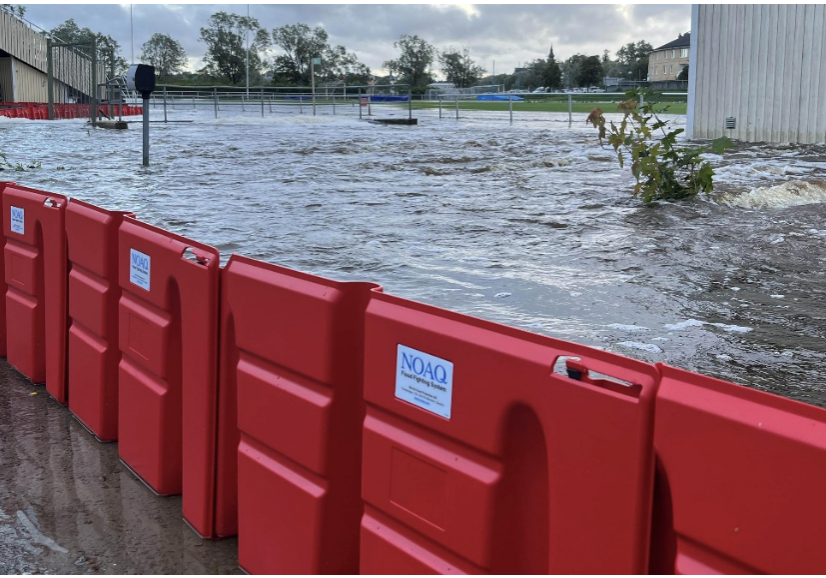
King tides are a natural phenomenon that can cause significant flooding and infrastructure challenges in coastal communities. Understanding why they occur and how to prepare for them is essential for residents, facility managers, and planners in vulnerable areas.
In this guide, we’ll explain what king tides are, why they happen, the risks they pose, and effective flood mitigation strategies that can help protect property and infrastructure.
What Is a King Tide?
King tides are the highest predicted tides of the year at a specific coastal location.
These extreme tides occur during perigean spring tides, when:
- The sun, moon, and Earth align during a new or full moon
- The moon is at its closest point to Earth (perigee)
- Gravitational forces combine to produce exceptionally high tides
King tides can:
- Raise water levels 1–2 feet above average high tide
- Cause nuisance flooding on otherwise sunny days
- Overwhelm stormwater systems
- Lead to saltwater intrusion in coastal environments
Unlike storm surge, king tides are predictable astronomical events rather than weather-related phenomena.
The Science Behind Perigean Spring Tides
Tides are caused primarily by the gravitational pull of the moon and sun.
Types of Tides
Spring Tides
Occur during new and full moons when the sun, moon, and Earth align.
- Higher high tides
- Lower low tides
- Occur twice each month
Neap Tides
Occur during quarter moons when gravitational forces partially offset one another.
- Smaller tidal range
- Less dramatic high and low tides
King Tides
Occur when spring tides coincide with the moon’s closest approach to Earth.
These events produce the highest tides of the year and typically occur three to four times annually.
Typical Tide Heights
| Tide Type | Typical Height Above Datum |
|---|---|
| Average High Tide (MHHW) | ~8.0 ft |
| Normal Spring Tide | ~9.0 ft |
| King Tide (Perigean Spring Tide) | ~10.0–10.5 ft |
Even an additional foot of water can be enough to overtop seawalls and flood low-lying coastal areas.
King Tides Across the United States
King tides occur along the:
- Pacific Coast
- Atlantic Coast
- Gulf Coast
The severity of impacts varies based on:
- Coastal geography
- Bay and estuary configurations
- Local drainage infrastructure
- Existing sea levels
Florida and Gulf Coast King Tides
Along Florida’s Gulf Coast, king tides commonly occur during the fall and winter months.
Potential impacts include:
- Flooded coastal roads
- Inundated neighborhoods
- Restricted access to waterfront properties
- Accelerated shoreline erosion
- Strong currents near shorelines and river mouths
When king tides coincide with tropical weather systems, flooding can become substantially worse.
Using Tide Predictions to Prepare
One of the advantages of king tides is that they are highly predictable.
NOAA and local agencies publish tide predictions years in advance using astronomical models and historical data.
How to Use Tide Forecasts
Facility managers and property owners can use forecasts to:
- Identify vulnerable assets
- Determine local flood thresholds
- Schedule maintenance around high-tide events
- Pre-stage flood protection equipment
- Improve emergency preparedness planning
Understanding local tidal patterns can significantly reduce disruption and damage.
Flood Risks Associated with King Tides
King tides can create flooding even when weather conditions are calm.
Common Impacts
- Sunny-day flooding
- Roadway inundation
- Flooded parking lots
- Overwhelmed storm drains
- Beach access closures
- Accelerated pavement deterioration
- Increased corrosion of infrastructure
- Coastal erosion
- Water quality concerns from pollutant runoff
Vulnerable Facilities
The following facilities are particularly susceptible:
- Utility substations and pumping stations
- Warehouses and distribution centers
- Ports and marinas
- Coastal commercial properties
- Low-elevation industrial facilities
Even minor flooding can disrupt operations and create costly repairs.
Flood Mitigation Strategies
Effective flood protection often combines permanent infrastructure improvements with temporary flood barriers.
Permanent and Semi-Permanent Solutions
Long-term mitigation options include:
- Seawalls
- Levees
- Raised bulkheads
- Elevated buildings and equipment
- Improved stormwater systems
- Backflow preventers
- Pump installations
While effective, these solutions can be expensive and may require extensive permitting.
Temporary and Deployable Solutions
For predictable events such as king tides, temporary barriers often provide a practical alternative.
Examples include:
- Sandbags
- Earthen berms
- Water-filled tubes
- Inflatable flood dams
- Modular flood barrier systems
Benefits of temporary systems include:
- Rapid deployment
- Lower upfront costs
- Reusability
- Minimal site modifications
Spotlight: NOAQ Boxwall Modular Flood Barrier
The NOAQ Boxwall provides a reusable flood protection solution designed for fast deployment during predictable flooding events.
Key Features
| Feature | Benefit |
|---|---|
| Lightweight panels (~33 lbs) | Easy handling and transportation |
| Tool-free interlocking design | Fast setup |
| Water retention capability | Holds back up to 40 inches of water |
| Self-anchoring design | Increased stability as water rises |
| Rapid deployment | Approximately 328 feet installed in about 60 minutes by two people |
| Durable materials | UV-stabilized polypropylene construction |
| Reusable design | Reduced long-term costs and waste |
| BABA Certified | Complies with Build America, Buy America Act requirements |
For many facilities facing predictable king tide flooding, modular barriers offer a flexible and cost-effective mitigation option.
Is Your Facility Prepared for King Tides?
King tides are predictable, but their impacts can still be costly. Identifying vulnerabilities and implementing flood protection measures before water levels rise can help reduce damage, downtime, and repair costs.
Need help evaluating flood risks at your site?
[BUTTON: Request a Flood Protection Assessment]
Or contact our team to discuss whether modular flood barriers are the right solution for your facility.
Frequently Asked Questions
Are king tides the same as storm surge?
No. King tides are predictable astronomical events caused by gravitational alignment between the Earth, moon, and sun. Storm surge is caused by weather systems such as hurricanes and tropical storms.
Do king tides always cause flooding?
Not necessarily. Flooding depends on local elevation, drainage systems, weather conditions, and existing sea levels.
How often do perigean spring tides occur?
Typically three to four times each year, although timing varies depending on lunar alignment.
Where can I find tide predictions?
NOAA’s Tides & Currents service is considered the authoritative source for tide predictions. Local harbor authorities and state agencies may also publish schedules.
Can the NOAQ Boxwall be reused?
Yes. The system is designed for repeated use with routine inspection and maintenance.
Are modular flood barriers right for every facility?
Modular barriers are ideal for predictable, shallow-to-moderate flooding events. Locations experiencing frequent or deep flooding may benefit from permanent flood protection infrastructure.

Looking for a flood barrier to protect your property?
Related Posts
May 20, 2026
How Do Flood Barriers Work?
March 20, 2026
Cascade Engineering Announces Strategic Partnership to Manufacture and Distribute NOAQ Flood Barrier Systems in North America
Let's Build Something That Lasts
Start a conversation with our team about your next project.